Davinci: Elegant Simplicity, Bold Clarity
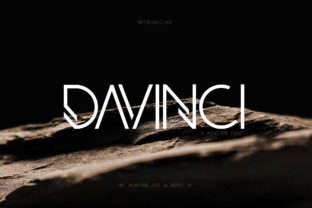
When you’re choosing a typeface for a brand identity, presentation deck, or long-form article, the right font does more than look good—it shapes how your message is received, remembered, and trusted. Davinci is a stunning and timeless sans serif font with a bold twist. Fall in love with its elegant simplicity. It’s not just another clean typeface; it’s a carefully balanced tool designed for clarity at any size, warmth without ornamentation, and presence without aggression.
Why Davinci Stands Out in a Crowded Typeface Landscape
Most modern sans serifs fall into one of two camps: ultra-neutral (think Helvetica or Inter) or highly expressive (like Poppins or Montserrat). Davinci lives confidently between them. Its letterforms have subtle humanist touches—gentle curve transitions, open apertures, and even stroke contrast—that lend approachability and quiet authority. The “bold twist” isn’t visual gimmickry; it’s structural intention. Uppercase letters sit slightly taller, x-heights are generous, and terminals taper with precision—giving weight where it matters most, without sacrificing legibility in body text.
Stronger Communication, Less Effort
For marketers launching a new campaign or educators preparing course materials, time spent adjusting spacing, tweaking weights, or second-guessing readability adds up. Davinci includes six thoughtfully spaced weights—from Light to Black—with matching italics. Each weight maintains consistent rhythm and proportion, so switching from headline to caption feels seamless, not jarring. You won’t need to manually adjust tracking for headlines or add extra line height to prevent crowding. That consistency translates directly into faster layout decisions and fewer rounds of client or stakeholder feedback.
A freelance designer building a brand system for a wellness startup told us, “I used Davinci for their website, packaging, and workshop handouts—and every team member instantly recognized the tone: calm but confident. No one asked, ‘Is this friendly enough?’ or ‘Does this feel too corporate?’ That saved us three full days of revision.”
Where Davinci Shines—and Where to Pause
Davinci excels in contexts where tone and trust matter as much as information: annual reports, editorial websites, product landing pages, pitch decks, and printed brochures. Its even color on the page makes it especially effective for long paragraphs—unlike some geometric sans serifs that can feel monotonous over extended reading. Readers absorb meaning more easily when typographic fatigue is reduced.
That said, Davinci isn’t built for extreme display use—like giant festival signage viewed from 50 meters away—or for interfaces requiring ultra-narrow widths (e.g., mobile navigation bars with tight character limits). Its proportions favor balance over compression. If your project demands extreme condensation or high-contrast decorative flair, pairing Davinci with a complementary display face (like a refined serif for pull quotes) often works better than forcing it beyond its natural range.
Real-World Pairings That Work Well
- With serif companions: Try Davinci headings paired with a warm, low-contrast serif like Lora or Cormorant Garamond for blog posts or newsletters—creating hierarchy without visual tension.
- In UI contexts: Use Davinci Regular or Medium for interface labels and body copy in admin dashboards or SaaS tools where clarity trumps novelty. Its open counters reduce misreading of similar characters (e.g., “1lI” or “0O”)
- For print refinement: Print designers appreciate how Davinci’s ink spread behavior remains predictable across paper stocks—no unexpected blurring or loss of definition in fine hairlines.
Supporting Creativity Without Dictating It
Some fonts come with strong personality—so much so that they steer design choices rather than support them. Davinci avoids that trap. Its elegance is understated, not prescriptive. A photographer building a portfolio site can use Davinci Light for captions and Davinci Bold for titles—letting images remain central while still establishing quiet cohesion. A small business owner updating their Shopify store doesn’t need to learn typography theory to get good results; Davinci’s built-in optical sizing means the same font file renders well on both desktop and mobile, without needing separate webfont variants.
This flexibility extends to multilingual projects. Davinci supports Latin, Greek, and Cyrillic scripts with harmonized metrics—so switching between English and Spanish content, for example, won’t break alignment or require manual overrides. That’s meaningful for educators creating bilingual lesson plans or publishers releasing translated editions.
Who Benefits Most—and Why
Professionals who regularly communicate complex ideas to mixed audiences—engineers explaining technical concepts to non-technical stakeholders, therapists designing client handouts, or nonprofit leaders writing grant proposals—find Davinci especially valuable. Its restrained confidence helps ideas land without defensiveness or detachment. There’s no visual shouting, yet nothing feels tentative.
Freelancers and agencies also benefit from Davinci’s licensing model: one license covers desktop, web, app, and ePub use. That eliminates the common headache of purchasing separate licenses for client deliverables across platforms—especially helpful when delivering brand guidelines that include digital and print assets.
A Note on Fit, Not Just Aesthetics
Typography is never one-size-fits-all. Davinci’s strength lies in its balance—not its universality. If your brand voice leans heavily into playfulness, irony, or avant-garde experimentation, Davinci may feel too grounded. Likewise, if your audience expects maximalist energy (e.g., youth-oriented music brands or streetwear labels), its calm sophistication could read as reserved rather than intentional.
Before committing, test Davinci with your actual content—not placeholder text. Paste a real paragraph from your latest newsletter. Drop in your most-used call-to-action phrase. See how it behaves at 14px on a mobile screen and at 60px on a hero banner. Does it hold attention without straining the eye? Does it reflect the values you want associated with your work? That kind of contextual testing reveals more than any specimen sheet ever could.
Timeless Doesn’t Mean Static
“Timeless” is often mistaken for “unchanging”—but Davinci was designed with evolution in mind. Its OpenType features include discretionary ligatures (subtle, not showy), true small caps, and proportional figures—tools that let experienced users refine detail without overcomplicating. Yet none of these features are required for excellent results. You can use Davinci out of the box and still achieve professional outcomes. As your needs grow, the font grows with you—supporting deeper craftsmanship without demanding it upfront.
In a world where attention is scarce and authenticity is earned, the fonts we choose quietly signal our standards. Davinci doesn’t shout. It listens first—and then speaks with quiet assurance. Whether you’re drafting a keynote slide, typesetting a novel manuscript, or selecting fonts for a decade-long brand identity, that kind of thoughtful restraint isn’t just practical. It’s rare.