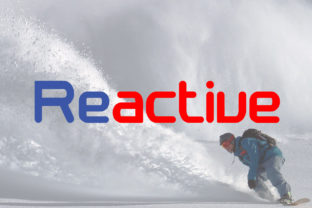
Reactive: A Bold, Fun Sans Serif Font for Modern Design Projects
When you’re designing a website, app interface, branding campaign, or even a presentation deck, typography isn’t just about legibility—it’s about tone, energy, and intention. Reactive is a contemporary sans serif font crafted with beautifully rounded corners, bold character shapes, and a lively rhythm that invites attention without demanding it. It’s not merely “friendly” or “playful”—it’s confidently modern, approachable yet professional, and engineered to perform across digital and print environments.
Many designers and content creators face recurring challenges: how to stand out in crowded digital spaces, how to communicate warmth and innovation simultaneously, or how to refresh outdated visual identities without sacrificing clarity or accessibility. Others juggle tight timelines and need fonts that work instantly—no extensive kerning adjustments, no compatibility hiccups, no licensing ambiguity. That’s where Reactive steps in—not as a decorative flourish, but as a strategic design partner.
What Makes Reactive Different—And Why It Matters
At its core, Reactive is built around human-centered readability and expressive personality. Its rounded corners soften sharp edges without compromising structure, giving text a gentle, inviting presence—even at small sizes. Unlike many geometric sans serifs that can feel cold or rigid, Reactive balances proportion, spacing, and curve tension to support both scanning and sustained reading.
This isn’t just aesthetic nuance. Rounded letterforms have been shown to evoke trust and approachability—valuable traits for education platforms, health tech interfaces, or community-driven apps. Meanwhile, its robust x-height and open apertures ensure strong legibility on mobile screens and low-resolution displays. In short: Reactive doesn’t ask users to adapt to the font; it adapts to how people actually read today.
Real-World Situations Where Reactive Adds Value
Consider these common scenarios—and how Reactive helps solve them:
- Startup branding needing instant recognition: Early-stage companies often lack budget for custom typeface development. Reactive offers distinctive voice and cohesion across logos, websites, and pitch decks—without requiring a designer to “fix” spacing or weight inconsistencies.
- Educational or wellness platforms aiming for inclusivity: Rounded forms reduce visual stress and support neurodiverse readers. Combined with its generous letter spacing and clear punctuation, Reactive contributes to a more accessible, calm user experience.
- Marketing teams refreshing outdated campaigns: If your current font feels stiff, dated, or overly corporate, Reactive injects energy while preserving professionalism—ideal for email headers, social banners, or CTA buttons that need to convert, not just decorate.
- Designers building component libraries or design systems: Reactive includes multiple weights (light to bold) and matching italics, making it easy to establish clear typographic hierarchy—headings, subheads, body copy, captions—all from one cohesive family.
Practical Applications You Can Implement Today
You don’t need a full rebrand to benefit from Reactive. Start small, test intentionally, and scale what works:
- Swap your hero headline font first. Replace a generic system font (like Helvetica or Arial) in your website’s main banner. Notice how Reactive’s curves create visual warmth and draw the eye—especially when paired with ample whitespace and a clean background.
- Use it for interactive elements. Buttons, form labels, and navigation links gain subtle friendliness with Reactive—supporting usability while reinforcing brand personality. Try pairing Reactive Bold for CTAs with a neutral body font like Inter or Roboto for balance.
- Apply it selectively in presentations. Instead of defaulting to Calibri or Segoe UI, use Reactive for slide titles and key takeaways. Its clarity holds up well on projectors and shared screens, and its personality helps audiences retain information longer.
- Test contrast and color carefully. While Reactive performs well across backgrounds, always verify WCAG AA compliance—especially with lighter weights on light backgrounds. Use tools like WebAIM’s Contrast Checker to confirm readability before launch.
How Different Users Approach Reactive—And What to Keep in Mind
A freelance designer might reach for Reactive when pitching to creative agencies or lifestyle brands—its versatility lets them shift tone quickly between projects. An in-house product designer may adopt it as part of a new design system rollout, appreciating its consistent metrics and cross-platform rendering. A marketing manager could license it for internal templates, ensuring all campaign assets reflect updated brand guidelines without needing constant designer oversight.
That said, context matters. Reactive shines brightest where warmth, modernity, and clarity are priorities—but it’s not ideal for dense legal disclaimers, academic journals, or ultra-minimalist luxury branding that relies on stark geometry. Think of it as a “human-first” typeface: best suited for experiences where connection matters as much as information.
Also consider technical fit. Reactive is available in WOFF2 and variable font formats—making it fast-loading and highly customizable via CSS. If you're using a CMS like WordPress or Shopify, confirm your theme supports custom font uploads or has built-in font management. Many modern site builders (Webflow, Framer, Squarespace) allow direct Reactive integration with minimal code.
Getting Started With Intention—Not Just Aesthetics
Adopting a new font shouldn’t be about chasing trends. It should serve a purpose: improving comprehension, strengthening identity, reducing cognitive load, or accelerating decision-making. Reactive delivers on those goals by merging thoughtful design with real-world functionality.
Before embedding it broadly, run quick usability tests: ask colleagues or users to scan a page using Reactive versus your current font. Do they notice headings faster? Do call-to-action buttons feel more inviting? Does the overall layout feel more balanced? These aren’t subjective preferences—they’re measurable indicators of typographic effectiveness.
And remember: great typography supports, never overshadows, your message. Reactive gives you room to express energy and empathy—but only if you pair it thoughtfully with layout, color, and content strategy. Use its boldness to highlight what matters most. Let its rounded corners soften friction points. And let its consistency build familiarity over time.
If you’re ready to bring more intention—and a little joy—to your next design project, Reactive is more than a font choice. It’s a quiet upgrade with visible impact.