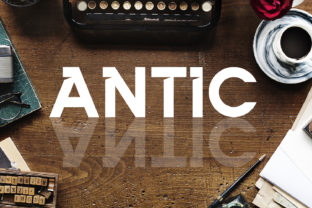
Antic: Bold, Big, Unmistakable
If you’ve ever stared at a layout that feels safe—but forgettable—you know the quiet power of a font that doesn’t ask for attention. It commands it. Antic is exactly that kind of sans serif font: big in scale, bold in presence, and unmistakably itself. It’s not trying to blend in. It’s built to anchor, energize, and clarify—whether you’re designing a craft fair banner, launching a newsletter header, or refining your brand’s digital voice.
A Font That Speaks Before You Do
Antic isn’t just large—it’s intentionally generous. Its tall x-height, open counters, and strong vertical stress give it exceptional legibility even at smaller sizes, while its weight and spacing make it shine at display scale. Think of it as a modern typography workhorse with personality: clean enough for editorial design, expressive enough for social media graphics, grounded enough for packaging design. Unlike many sans serif fonts that lean neutral or minimalist, Antic carries warmth through subtle humanist touches—gentle curve transitions, balanced proportions, and a rhythm that feels intentional, not algorithmic.
It’s not a script font or handwritten font. It doesn’t mimic calligraphy or evoke nostalgia. Instead, Antic occupies a confident middle ground: contemporary but not cold, distinctive but not distracting. That balance makes it especially useful when you need clarity *and* character—like labeling a product line, setting a keynote slide title, or designing a podcast cover where visual hierarchy must land in under two seconds.
Where Antic Earns Its Place
You’ll find Antic working hardest where first impressions matter most. In logo design, it delivers immediate recognition without relying on ornamentation—ideal for small business owners who want their name to feel solid and approachable. For bloggers and content creators, it adds authority to headlines without sacrificing readability on mobile screens. In print, it holds up beautifully on uncoated paper or textured stock, giving flyers, zines, or event posters a tactile, crafted quality.
Marketers use Antic to reinforce consistency across touchpoints: a single bold weight can unify email headers, Instagram story text, and landing page banners—no need to juggle multiple typefaces to “feel cohesive.” Publishers appreciate how its generous letter spacing improves scannability in long-form web layouts, while crafters and hobbyists rely on it for DIY signage, embroidery patterns, or sticker sheets where clean outlines and strong shapes translate well to cutting machines and vinyl plotters.
Readability Isn’t Just About Size—It’s About Fit
Don’t assume “big” automatically means “easy to read.” Antic works because its design decisions support function. Its uppercase letters are notably robust, making it ideal for acronyms, short slogans, or all-caps navigation labels. Lowercase forms maintain clarity even in tight line spacing—a practical win for responsive web design where vertical real estate is limited. That said, avoid using Antic for dense body copy. It’s a display font, not a text font. Reserve it for headings, pull quotes, logos, buttons, and other high-impact moments.
Test it in context: paste a headline into your actual CMS or mockup tool—not just a font sampler. See how it behaves next to your primary text font (a simple, neutral sans serif or even a gentle serif font often pairs well). Watch how it renders on older Android devices or low-DPI screens. If letters start to blur or spacing feels uneven at 24px, step back and adjust tracking or size before committing.
Pairing Without Overcomplicating
Antic thrives alongside typefaces that offer contrast—not competition. Try pairing it with a modest, highly legible sans serif font like Open Sans or Inter for body text. Their neutrality lets Antic breathe and lead. For editorial or creative projects, a restrained serif font—think Merriweather or Lora—can add quiet sophistication without clashing. Avoid pairing it with other bold, geometric sans serifs (like Montserrat Black or Bebas Neue) unless you’re aiming for deliberate tension—and even then, limit usage to one dominant element per layout.
Remember: font pairing isn’t about matching moods. It’s about assigning roles. Let Antic be the voice that introduces, declares, or emphasizes. Let your secondary font handle the explanation, the detail, the flow. That division of labor builds professionalism and guides the eye naturally.
Licensing, Styles, and Real-World Checks
Antic is an open-source font—freely available under the SIL Open Font License. That means you can use it commercially, modify it, embed it in apps or PDFs, and distribute it with your design assets—no royalties, no hidden fees. But “free” doesn’t mean “untested.” Before dropping it into a client project, verify which styles are included. The standard Antic family offers one weight (Regular), so if you need bold or italic variants, plan accordingly—either by adjusting weight manually (with care) or selecting a complementary font that provides those options.
Also check rendering behavior in browsers. While Antic displays reliably in modern Chrome, Safari, and Firefox, some older versions may substitute fallbacks if not loaded correctly. Always declare it in your CSS with appropriate fallbacks (font-family: "Antic", -apple-system, BlinkMacSystemFont, "Segoe UI", sans-serif;) and test across devices. If you're using it in a WordPress theme or Shopify store, confirm the font file is properly enqueued—not just pasted into custom CSS.
When to Reach for Antic—and When Not To
Reach for Antic when: your message needs immediacy, your audience skims quickly, your medium benefits from strong silhouettes (think signage, apparel, or thumbnails), or your brand values clarity over complexity. It’s especially effective for mission-driven initiatives, local businesses, education materials, and creative portfolios—anywhere authenticity and directness matter more than ornamental flair.
Pause before using Antic when: your project relies heavily on subtlety, elegance, or tradition (e.g., luxury branding or formal invitations); when your text blocks are long and dense; or when your audience includes readers with dyslexia or low vision and you haven’t tested its performance alongside accessibility tools. Even great fonts have boundaries—and knowing them is part of using Antic well.
In practice, that might mean using Antic for your podcast’s main title graphic, but switching to a more relaxed sans serif for episode descriptions. Or applying it to a workshop flyer’s headline and date, while choosing a warmer, rounded font for instructor bios. Flexibility isn’t weakness—it’s how Antic stays useful, not just striking.