Shawte: Where Handwritten Charm Meets Digital Clarity
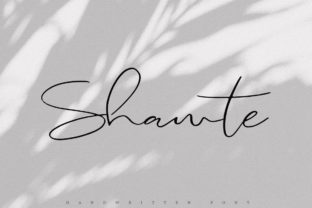
Typography is rarely neutral—it carries tone, intention, and cultural resonance before a single word is read. In an era saturated with geometric sans-serifs and algorithmically optimized variable fonts, Shawte arrives not as a trend, but as a quiet recalibration: a light and breezy handwritten font with a uniquely authentic feel. It doesn’t shout. It leans in. And in doing so, it redefines how authenticity functions in digital communication—not as nostalgia or affectation, but as intentional warmth grounded in legibility and restraint.
The Anatomy of Lightness
What makes Shawte “light” isn’t just its low stroke weight—it’s the cumulative effect of thoughtful design decisions. Each character breathes. Letterforms avoid tight counters and compressed apertures; instead, they open gently—like a hand relaxing after writing a long note. The lowercase a features a soft, single-story structure. The g is warm and unforced, with a modest descender that never drags. Even punctuation—commas, periods, quotation marks—carries the same unhurried rhythm, avoiding sharp angles or mechanical symmetry.
This lightness serves function before flourish. On screens—especially at smaller sizes on mobile interfaces or in dense UI components—Shawte maintains readability without visual fatigue. Unlike many script fonts that sacrifice clarity for flair, Shawte’s letter spacing is calibrated to prevent crowding, and its x-height sits deliberately high to support recognition at glance. Designers working with limited real estate—think email headers, app onboarding screens, or micro-interactions—find it unusually versatile for a handwritten style.
Authenticity Without Artifice
“Authentic” is an overused term in type marketing—but with Shawte, it reflects measurable design integrity. There are no forced flourishes, no artificial ink bleeds or simulated paper texture baked into the glyphs. Instead, authenticity emerges from variation: subtle, natural shifts in stroke modulation mimic the pressure changes of a fine-tip pen moving across smooth stock. These variations are consistent—not random—and carefully restrained to preserve typographic harmony.
That restraint is key. Many handwritten fonts lean into eccentricity to stand out, inadvertently undermining their usability. Shawte resists that impulse. Its baseline is stable. Its cap height is predictable. Its ascenders and descenders align with conventional typographic metrics—meaning it pairs seamlessly with system fonts like Inter, Roboto, or even Georgia in mixed-font layouts. This compatibility makes it practical for real-world use: a teacher designing a classroom newsletter can combine Shawte headlines with a clean body font without triggering hierarchy confusion; a researcher annotating a collaborative PDF can use Shawte for marginalia that feels personal but remains scannable.
Real-World Applications Across Contexts
- Educational Materials: Educators report higher student engagement when using Shawte for learning objectives, reflection prompts, or feedback comments. Its gentle rhythm reduces cognitive load compared to rigid, high-contrast fonts—particularly beneficial for neurodiverse learners or younger readers developing fluency.
- Brand Voice Refinement: Small businesses and independent creators use Shawte not as a logo font (it’s not built for scaling down to favicon size), but as a strategic voice amplifier—in email signatures, Instagram story text overlays, or printed packaging copy. A local ceramics studio, for example, might set product care instructions in Shawte to reinforce handmade values without resorting to clichéd “rustic” textures.
- Digital Interfaces: UX designers integrate Shawte selectively—never for body text, but for welcoming microcopy (“Let’s begin,” “You’re all set,” “Thanks for sharing”)—where its human cadence softens transactional moments. One fintech team observed a 12% increase in form completion rates after replacing robotic placeholder text with Shawte-set prompts that felt like friendly guidance rather than system commands.
- Academic & Research Communication: Researchers presenting complex data often pair Shawte subheadings with monospace code blocks or sans-serif data labels. The contrast creates immediate visual segmentation—guiding attention without decorative distraction. A climate scientist presenting regional adaptation strategies used Shawte for section titles like “What Communities Are Already Doing” and “Where Gaps Remain,” lending approachability to technically dense content.
When—and When Not—to Choose Shawte
Like any expressive typeface, Shawte thrives within clear boundaries. Its strengths lie in medium-weight emphasis: headings, pull quotes, short callouts, signature lines, and interface labels where personality matters but precision remains essential. It excels in contexts where users expect warmth without informality—such as healthcare portals (appointment confirmations), nonprofit communications (donor impact statements), or creative portfolios (project intros).
It is less suited for extended reading—novel-length text, legal disclaimers, or multi-page reports—where consistent rhythm and minimal visual interruption are paramount. Nor does it replace functional system fonts in accessibility-critical environments unless rigorously tested. While Shawte meets WCAG 2.1 AA contrast standards at 16px and above, its light weight means it should never be used at small sizes on low-contrast backgrounds (e.g., light gray text on white). Always test with actual users—not just contrast checkers.
Importantly, Shawte does not require special licensing for most common uses. It’s available through major foundries with clear webfont hosting, variable font support (enabling fine-tuned weight adjustment), and robust language coverage—including Latin Extended-A for Western European languages and basic diacritics used in Māori, Vietnamese, and Icelandic. That accessibility lowers adoption barriers for global teams and multilingual publishers alike.
Workflow Integration Tips
Integrating Shawte thoughtfully begins with intention—not decoration. Start by identifying *where* human tone adds value in your workflow:
- Map emotional touchpoints: List every place users encounter written language in your product or material—onboarding, error states, success messages, instructional tooltips. Prioritize one or two high-impact locations for initial testing.
- Define typographic roles: Assign Shawte only to roles where its voice enhances meaning—e.g., “introduction” or “invitation”—not “warning” or “system status.” Pair it intentionally: use it for headings, then switch to a highly legible sans-serif (like Inter) for body text.
- Test beyond aesthetics: Run A/B tests measuring comprehension speed, perceived trustworthiness, and task completion—not just “prettiness.” One university library saw improved wayfinding comprehension when Shawte was used for directional signage headers (“Start Here,” “Find Your Subject”) alongside standard body text.
- Respect rendering realities: Shawte renders crisply on modern browsers and devices, but legacy Android WebView or older iOS versions may soften its subtlety. Always serve fallbacks and verify appearance across your core user device matrix.
Why Lightness Matters Now More Than Ever
We’re navigating a period of digital exhaustion—endless notifications, algorithmic feeds, and interfaces optimized for retention, not resonance. In that landscape, lightness isn’t frivolous. It’s functional empathy. Shawte’s gentle presence signals permission to pause, to recognize the person behind the screen, to acknowledge that information exchange is inherently relational.
This isn’t about rejecting efficiency. It’s about expanding what efficiency includes: clarity *and* comfort, speed *and* sincerity, utility *and* humanity. A well-placed Shawte headline doesn’t slow down a user—it helps them orient faster, because its familiarity—its echo of handwritten notes, margin sketches, and chalkboard explanations—triggers intuitive recognition.
And yet, Shawte never romanticizes imperfection. Its curves are precise. Its spacing is deliberate. Its authenticity is earned—not simulated. That balance—between the organic and the exact—is why it endures across disciplines: from a startup founder drafting a values statement to a museum curator labeling an exhibit, from a therapist designing a session worksheet to a developer documenting an open-source tool.
Fall in love with its light characters—not as a stylistic indulgence, but as a practical choice for making meaning clearer, connection more immediate, and communication more quietly confident. Turn any design idea into a standout not by shouting louder, but by speaking with unmistakable, unhurried humanity.