Alica: Where Calm Meets Character in Handwritten Typography
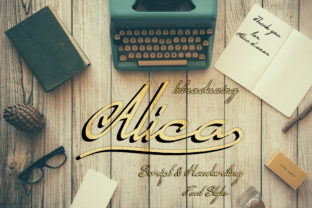
There’s something quietly powerful about a font that doesn’t shout—but still holds your attention. Alica is one of those rare typefaces: calm, beautiful, and unmistakably human. Designed with authentic swashes and a natural handwritten rhythm, it doesn’t imitate calligraphy—it breathes like it. Whether you’re crafting an intimate wedding invitation, refining a boutique brand identity, or adding warmth to a digital newsletter, Alica offers more than visual appeal. It delivers emotional resonance.
What Makes Alica Feel So Authentically Handwritten?
Not all “handwritten” fonts feel hand-drawn—and that’s where Alica stands apart. Its letterforms were crafted with deliberate variation: subtle shifts in stroke weight, organic entry and exit strokes, and carefully considered swashes that flow rather than force. These aren’t decorative add-ons; they’re integrated into the core design language. Each capital “S”, for example, features a graceful downward flourish that mirrors how a pen naturally lifts and curves on paper. Lowercase “g” and “y” include soft, looping descenders—not rigid geometry, but gentle motion frozen in type.
That authenticity comes from intentionality. The designer didn’t digitize a single script and replicate it across the alphabet. Instead, Alica was built with contextual alternates—meaning certain characters change shape depending on what surrounds them. An “a” followed by an “n” might connect with a delicate ligature, while the same “a” before an “r” opens up slightly for better spacing and rhythm. This isn’t just aesthetic polish—it’s typographic empathy.
Where Alica Shines in Real-World Projects
You don’t need a grand launch or luxury budget to benefit from Alica. Its quiet confidence makes it adaptable across scales and mediums—so long as the goal is connection, not clutter.
- Wedding & Event Design: Couples increasingly seek stationery that feels personal, not pre-packaged. Alica’s swashes lend elegance without formality; its relaxed baseline keeps things approachable. Pair it with a clean sans-serif for body text (think Inter or Montserrat), and you’ve got hierarchy that guides the eye without competing for attention.
- Small Business Branding: Cafés, ceramic studios, herbal apothecaries—brands rooted in craft and care often lean into handwritten fonts to signal warmth and authenticity. Alica avoids the “cutesy” trap many script fonts fall into. Its measured pace and balanced proportions make it credible for logos, packaging labels, and social bios alike.
- Digital Storytelling: Blogs, newsletters, and portfolio sites gain texture when headlines carry personality. Using Alica sparingly—for section headers, pull quotes, or featured titles—adds tonal depth without sacrificing readability. Just avoid setting full paragraphs in Alica; its beauty lives in contrast, not volume.
Practical Considerations Before You Use Alica
Like any expressive typeface, Alica rewards thoughtful application—and reveals its limits when pushed too far. Here’s what seasoned designers keep in mind:
- Licensing matters—especially for commercial use. Alica is available through reputable foundries like Adobe Fonts and independent vendors. Always verify whether your license covers web embedding, app integration, or merchandise printing. Some versions include OpenType features (like stylistic sets and discretionary ligatures) only accessible with professional design software.
- It thrives in medium-to-large sizes. At 14px or smaller, Alica’s delicate swashes and thin strokes begin to blur on screen. Reserve it for display settings: headlines above 24px, logo lockups, printed posters, or engraved wood signs. For body copy, pair it intentionally—not as a substitute, but as a complement.
- Contrast is your co-designer. Alica sings next to neutral, well-spaced sans-serifs or sturdy serifs like Merriweather or Lora. Avoid pairing it with other scripts or overly decorative fonts—that creates visual noise, not harmony. Think of Alica as the lead vocalist: let the supporting type handle rhythm and clarity.
Why Designers Are Choosing Alica Over Trendier Alternatives
The font landscape is crowded with “handwritten” options—some bubbly, some dramatic, some aggressively quirky. What sets Alica apart isn’t novelty, but nuance. In a world of algorithm-driven aesthetics and AI-generated visuals, Alica feels like a pause button. It doesn’t chase virality; it invites reflection.
Consider this: When users land on a homepage using Alica for its hero headline, they don’t register “pretty font.” They register calm. Trust. Intention. That’s not accidental—it’s baked into the spacing, the slant, the way terminals taper. Studies in typography perception show that moderate stroke contrast and open counters improve perceived legibility—even when readers aren’t consciously analyzing letterforms. Alica balances those qualities effortlessly.
And unlike fonts built for maximum versatility, Alica owns its purpose. It won’t work for a tech startup’s dashboard UI or a sports apparel campaign demanding high-energy impact. But if your goal is to evoke quiet confidence—a wellness coach’s ebook cover, a poet’s chapbook title, a linen brand’s tagline—Alica doesn’t compete with your message. It deepens it.
Getting the Most From Alica’s Swashes
The swashes in Alica aren’t ornaments—they’re extensions of voice. Used well, they reinforce rhythm and guide the reader’s eye. Used poorly, they distract.
Start simple: enable standard ligatures first (often automatic in modern apps like Figma or Adobe Illustrator). Then explore stylistic sets—many Alica variants include alternate capitals designed specifically for beginning or ending words. A capital “T” with an extended crossbar works beautifully at the start of a phrase like “Together We Grow.” A swashed “e” or “l” at the end of “Celebrate” adds closure and grace.
Pro tip: Try typing your phrase twice—once with swashes, once without—and step back. Does the embellishment clarify or complicate? If the answer isn’t immediately clear, simplify. Authenticity in Alica comes from restraint as much as flair.
Alica in the Age of Digital Intimacy
We’re spending more time online—but craving more humanity in the interfaces we engage with. Email subject lines, landing page headlines, even Slack channel names now carry tone and identity. Alica responds to that shift. It’s not nostalgic—it’s responsive. Its lowercase “a”, “e”, and “o” have generous x-heights and open apertures, making them surprisingly resilient on mobile screens. Its kerning pairs thoughtfully across common word combinations (“love”, “forever”, “gather”), so it reads smoothly, not stiffly.
Even in motion, Alica adapts. Animating a single swash—say, the tail of a “y” drawing itself on scroll—adds micro-interaction that feels handmade, not programmed. That kind of detail builds subconscious rapport. Users don’t think, “Oh, a custom animation.” They think, “This feels cared for.”
That’s the quiet power of Alica: it doesn’t try to be everything. It asks only to be *enough*—for the right moment, the right voice, the right human behind the screen.