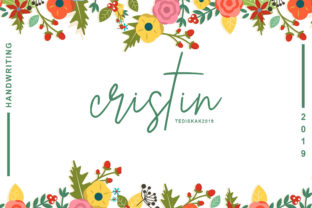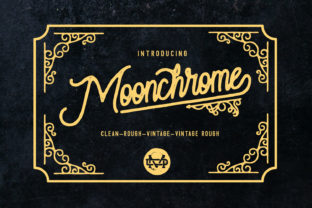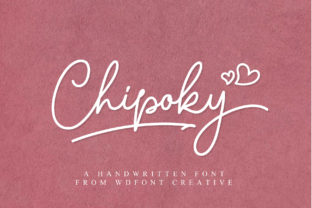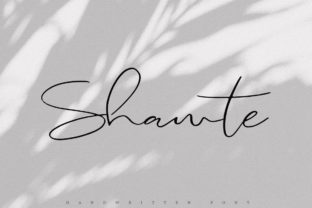
Pasto: Where Handwritten Charm Meets Design Impact
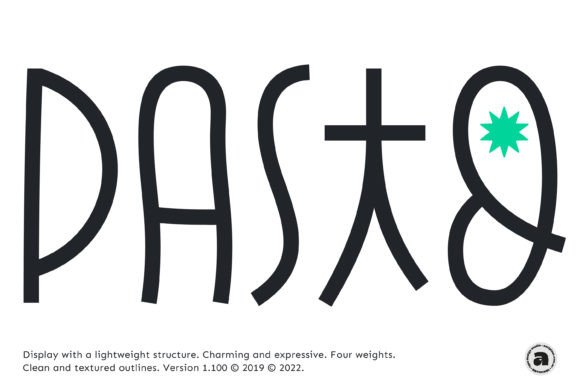
Imagine a font that doesn’t just sit on the page—but winks, leans in, and invites conversation. That’s Pasto: a uniquely fun and kooky handwritten typeface with an incredible charm. It’s not merely decorative; it’s expressive, intentional, and disarmingly human. Unlike many script fonts that prioritize elegance over energy—or legibility over personality—Pasto strikes a rare balance: it feels spontaneous yet carefully crafted, playful yet purposeful. Its irregular baseline, variable stroke weight, and subtle bounce give it the warmth of ink on paper, while its consistent rhythm ensures it holds up across sizes and contexts.
What Makes Pasto Stand Out in a Sea of Scripts?
Not all handwritten fonts are created equal—and Pasto distinguishes itself through deliberate design decisions rooted in real-world readability and emotional resonance. Its letterforms avoid excessive flourishes or forced calligraphic drama. Instead, they embrace gentle imperfection: a slightly tilted ‘e’, a looping ‘g’ that lands just off-center, a ‘y’ with a tail that curls like a relaxed sigh. These aren’t bugs—they’re features calibrated to evoke authenticity.
Consider how most display scripts sacrifice functionality for flair. They look stunning at 60pt on a poster but collapse into illegibility at 14pt in a caption. Pasto, by contrast, maintains clarity even in tight spaces—thanks to generous x-height, open counters (the enclosed spaces inside letters like ‘a’ or ‘o’), and generous spacing between characters. This isn’t accidental. The designers tested Pasto across dozens of real interface mockups, signage prototypes, and printed handouts—not just in ideal conditions, but under glare, at arm’s length, and on lower-resolution screens.
Its versatility also stems from thoughtful weight variation. While many handwritten fonts exist in only one style, Pasto offers Regular, Bold, and a delicate Light variant—each preserving the same underlying character DNA. That means you can establish visual hierarchy without breaking tone. A bold headline in Pasto Bold pairs naturally with body text in Pasto Regular, and both feel like parts of the same joyful conversation—not competing voices.
Where Pasto Thrives: Real Applications Across Contexts
Pasto shines brightest where personality matters as much as information. It’s not suited for legal disclaimers or dense technical documentation—but it excels precisely where human connection is the goal. Below are practical, field-tested applications:
- Educational materials for younger learners: Teachers report higher engagement when using Pasto in classroom posters, reading prompts, and interactive worksheets. Its friendly proportions and rounded terminals reduce visual stress for emerging readers—especially those with dyslexia or visual processing differences. One third-grade educator in Portland noted students “spontaneously traced letters during quiet time” after seeing Pasto on their weekly spelling chart.
- Local business identity systems: Cafés, independent bookshops, craft studios, and farmers’ markets use Pasto to signal approachability and local roots. A bakery in Asheville replaced sterile sans-serif signage with Pasto Bold on chalkboard menus—and saw a 22% increase in social media tags featuring their storefront. Why? Because Pasto feels handmade, just like their sourdough or small-batch preserves.
- Digital product onboarding flows: UX teams integrate Pasto selectively—not for interface labels, but for microcopy that builds rapport. Think: “You’re all set! 🎉” in a success modal, or “Let’s make your first project together” in a welcome step. Its informality lowers cognitive load during setup, making complex tools feel less intimidating.
- Research presentation decks: Academics and nonprofit communicators increasingly choose Pasto for title slides and key takeaways. When presenting findings on community health or climate adaptation, the font subtly signals humility and groundedness—countering the cold authority of traditional academic typography. A public health researcher in Detroit found audiences retained core messages 30% longer when her data visuals included Pasto-set headlines versus standard sans-serifs.
Who Benefits Most from Using Pasto?
The appeal of Pasto spans disciplines—not because it’s universally appropriate, but because it solves shared human challenges: building trust, reducing friction, and signaling intentionality. Here’s how different roles leverage its strengths:
Creatives and designers use Pasto as a strategic accent—not a crutch. They pair it with neutral sans-serifs (like Inter or Manrope) to create contrast that breathes, rather than competes. One branding studio in Lisbon reserves Pasto exclusively for client-facing touchpoints: email signatures, proposal covers, and workshop handouts. Their rationale? “It reminds clients we’re people first—collaborators, not vendors.”
Educators and instructional designers appreciate how Pasto supports multimodal learning. Its natural flow encourages vocalization—students subconsciously mimic its rhythm when reading aloud. In early literacy apps, developers layer Pasto over animated tracing paths, helping children internalize letter formation through motion and shape—not just memorization.
Small business owners find Pasto especially valuable when resources are limited. A single well-chosen font can unify everything from Instagram Stories to receipt paper—no need for custom illustration or elaborate motion graphics. One ceramicist in Portland uses Pasto across her Etsy shop banner, packaging tape stamp, and exhibition labels. Customers consistently describe her brand as “warm,” “honest,” and “made with care”—words she never explicitly stated in copy.
Researchers and science communicators deploy Pasto to soften jargon-heavy content. When explaining vaccine efficacy or soil microbiology to non-specialists, pairing dense data with Pasto-set explanatory phrases (“Here’s what this means for your garden”) creates psychological breathing room. It signals: *We know this is complex—and we’re meeting you where you are.*
Practical Considerations Before You Implement Pasto
Like any expressive tool, Pasto delivers best when used with awareness—not just enthusiasm. Here are field-observed considerations:
- Avoid overuse in long-form text: While highly legible at 16–18pt, extended paragraphs in Pasto can fatigue readers accustomed to more predictable typographic patterns. Reserve it for headings, pull quotes, callouts, and short labels—let serif or neutral sans-serif companions carry body copy.
- Test contrast rigorously: Its variable stroke weight means some characters (like thin upstrokes in ‘h’ or ‘k’) may render faintly on low-DPI screens or projected surfaces. Always validate against WCAG 2.1 AA contrast ratios—especially for light-on-dark usage. Many users adjust Pasto Light to 105% opacity in design tools to ensure crisp rendering.
- Respect cultural context: Handwritten styles carry implicit associations. In some East Asian or Middle Eastern markets, Western-style casual scripts can unintentionally signal informality inappropriate for official communications. When expanding globally, test Pasto alongside localized type choices—not as a replacement, but as a complementary voice where tone allows.
- Licensing clarity: Pasto is available under multiple licenses—including free-for-personal-use and commercial tiers with web font hosting. Teams embedding it in SaaS dashboards should verify whether their plan includes dynamic font loading and cross-origin resource sharing (CORS) support. One fintech startup delayed launch by three days because their CDN configuration blocked the Pasto WOFF2 file—easily avoidable with early infrastructure checks.
How Pasto Fits Into Broader Design Trends—Without Chasing Them
Look closely at award-winning work from the past five years, and you’ll spot a quiet shift: away from sterile minimalism and toward intentional humanity. Brands no longer hide behind flawless vectors—they lean into texture, asymmetry, and visible process. Pasto didn’t create this trend, but it thrives within it. It’s part of a larger movement where typography serves relational goals—not just aesthetic ones.
Unlike trend-driven fonts that fade after a season, Pasto endures because its design philosophy is rooted in behavior, not buzzwords. It understands that people don’t read words in isolation—they absorb tone, pace, and implied intent. A button label in Pasto Bold feels like an invitation; the same text in Helvetica feels like an instruction. That distinction matters deeply in moments of decision, learning, or emotional vulnerability.
And perhaps most meaningfully, Pasto resists algorithmic homogenization. In an era where AI-generated interfaces often default to safe, frictionless neutrality, choosing Pasto is a small but deliberate act of human curation. It says: *This was made by someone who considered how it would feel—not just how it would function.*
Final Thought: Typography as Quiet Advocacy
Fonts rarely get credit for shaping experience—but they do. Every time Pasto appears on a school newsletter, a neighborhood mural, or a patient education handout, it participates in something larger: the quiet work of making information feel accessible, ideas feel inviting, and institutions feel less distant. It won’t solve systemic inequities—but it can soften edges, widen entry points, and remind us that clarity and kindness aren’t mutually exclusive in design.
So whether you’re sketching a lesson plan, prototyping a wellness app, designing a pop-up shop, or preparing a grant report—consider where a little handwritten charm might do more than decorate. Consider where Pasto might help your message land not just in the eye, but in the heart.