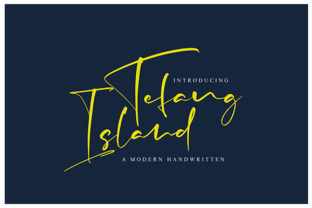
Tefang Island: A Handwritten Font with Soul
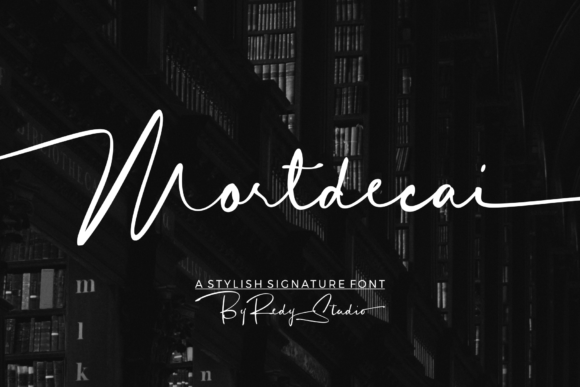
If you’ve ever scrolled through a font library and paused—not because it’s flashy, but because it feels quietly magnetic—you know the kind of presence Tefang Island carries. It’s not just another handwritten font. It’s a carefully crafted display typeface that balances looseness and intention, spontaneity and control. The letterforms have subtle irregularities—slight variations in stroke weight, gentle tapering on terminals, soft entry and exit strokes—that echo natural pen movement. There’s warmth in the curves, confidence in the slant, and a relaxed rhythm that never slips into chaos.
More Than Just “Handwritten”—It’s Human-Centered Typography
Tefang Island belongs to the script font family, but it avoids the overly ornate or cursive-heavy tendencies of many peers. Its x-height is generous, spacing is open and breathable, and lowercase letters sit comfortably on the baseline without excessive bounce or swing. That means it reads clearly at medium sizes—ideal for headlines, short quotes, product names, or social media banners—without demanding squinting or second glances. Unlike some premium fonts that prioritize aesthetic over function, Tefang Island was built with real-world legibility in mind. You’ll notice how the lowercase a, g, and s retain distinct shapes even when scaled down to 24–36px on screen. That’s not accidental—it’s thoughtful design.
Where Tefang Island Earns Its Place
This font shines where personality matters more than neutrality. Think brand identity for a ceramic studio, an indie coffee roaster, or a wellness retreat—places where authenticity and approachability are core values. In editorial design, it works beautifully as a chapter title font in a lifestyle magazine or as a pull-quote treatment in a long-form blog post. For packaging design, Tefang Island adds tactile charm to labels, jars, or greeting cards without competing with product photography. On websites, it performs best in hero sections, call-to-action buttons, or testimonial highlights—never body copy, but always where tone needs lifting.
It also holds up surprisingly well in motion graphics and social media graphics. Because its forms aren’t overly condensed or tightly spaced, it animates cleanly—no awkward clipping or overlapping during subtle entrance effects. And unlike many script fonts that blur at small sizes on mobile, Tefang Island retains character even at 18px in interface elements like app onboarding screens or email headers.
Pairing It Thoughtfully (Not Just “Pretty With Sans Serifs”)
Yes, pairing Tefang Island with a clean sans serif is reliable—but let’s go deeper. Try it with a low-contrast, humanist sans like Inter or IBM Plex Sans for digital projects where readability and warmth coexist. For print or branding work, consider a warm, slightly rounded serif like Sorts Mill Goudy or EB Garamond—the contrast between Tefang Island’s fluidity and the serif’s grounded structure creates visual harmony, not tension.
Avoid pairing it with other script fonts unless you’re intentionally building layered texture (e.g., Tefang Island for the main headline, a tighter monoline script for subhead). And steer clear of ultra-geometric sans serifs like Montserrat Bold unless your goal is deliberate dissonance—Tefang Island’s organic energy can feel stifled next to rigid geometry.
What’s Included—and What to Check Before You Use It
Most licensed versions of Tefang Island include regular and bold weights, with full Latin character sets, standard ligatures, and basic OpenType features like stylistic alternates. Some releases add swashes or contextual alternates—use those sparingly, and only where they serve meaning (e.g., a single swashed initial in a logo lockup, not across every word).
Before licensing, verify whether the version you’re considering supports extended language characters if your audience includes Spanish, French, or Portuguese speakers. Also check kerning pairs—some free or discounted variants skip fine-tuning, leading to awkward gaps around letters like T, V, or W. A quick test: type “Tefang Island TV” and look for consistent spacing. If the T and V feel stranded, that’s a red flag.
Readability Isn’t Optional—It’s Part of the Vibe
Here’s something practical: Tefang Island isn’t meant for paragraphs, captions, or data tables. Its strength lies in brevity and emphasis. When used correctly—as a headline, logo element, or decorative accent—it elevates tone without sacrificing clarity. But misuse it (say, as body text on a Shopify product page), and you’ll erode trust before the first sentence finishes. Real audiences don’t admire “cool fonts”—they respond to clarity, consistency, and cues that signal care. Tefang Island delivers that when placed with intention.
Also worth noting: its line-height behavior differs from most system fonts. At 32px size, aim for 1.3–1.4 line-height in CSS—not the default 1.2—to preserve air between lines and prevent visual crowding. In print, use 14–16pt size with 18–20pt leading for optimal flow.
Licensing That Fits Your Workflow
Tefang Island is a commercial font, and its licensing reflects real-world usage. Most vendors offer desktop, web, and app licenses separately—or bundled. If you’re a blogger embedding it via @font-face, confirm the web license covers your monthly pageviews. Designers working for clients should double-check whether the license permits redistribution (e.g., handing off source files to a printer or developer). And if you’re building templates for marketplaces like Creative Market or Etsy, verify whether the license allows embedding in editable design assets—some do, some don’t.
One final note: avoid “free download” versions floating online. They’re often outdated, stripped of OpenType features, or missing critical glyphs. Worse, they may carry hidden malware or violate copyright terms that expose your client—or your business—to risk. A legitimate license isn’t overhead; it’s insurance for your creative integrity.
Tefang Island doesn’t shout. It leans in. It invites attention without demanding it. That’s rare. And in a world saturated with interchangeable fonts, that quiet confidence is exactly why designers, marketers, and small business owners keep returning to it—not for trendiness, but for resonance.