Morellin: Handwritten Elegance That Fits Real Life
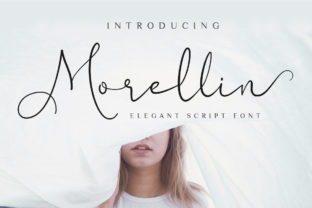
Morellin isn’t just another script font you scroll past in a type library. It’s the kind of handwritten typeface that feels like it was sketched by a thoughtful designer who knew you’d use it—not just admire it. Casual enough for a weekend journal entry, elegant enough for a wedding invitation, and modern enough to hold its own on a sleek Shopify product page. Morellin strikes that rare balance: relaxed but intentional, personal but polished.
Where Morellin Fits Naturally—Not Just Where It *Could* Fit
You don’t need a “font moment” to justify using Morellin. You’ll reach for it when something feels off with your current type choices—like when your blog’s headline looks too stiff next to warm, personal storytelling, or when your small-batch candle label reads like a hardware manual instead of a sensory experience. It works where authenticity matters more than uniformity.
Think of it as your go-to for moments when tone carries as much weight as content. A freelance graphic designer uses Morellin for client mood boards because it subtly signals creativity and care—not corporate polish. An educator drops it into a printable classroom poster about growth mindset, and suddenly the message feels inviting, not directive. A food blogger swaps their standard serif for Morellin in recipe titles—and readers linger longer, sensing warmth before they even click.
Real Use Cases—From Screen to Shelf
Morellin thrives across formats, but not equally everywhere. Here’s where it delivers tangible value:
- Digital branding for solopreneurs: If you’re a yoga instructor, tarot reader, or ceramicist launching a website or Instagram highlight cover, Morellin adds quiet confidence without shouting. It pairs cleanly with neutral sans-serifs (like Inter or Poppins) for body text—keeping readability intact while letting your voice shine through headings and quotes.
- Printed goods with personality: Wedding stationery, boutique packaging, or handmade soap labels benefit from Morellin’s subtle variation in stroke weight and natural rhythm. Unlike overly ornate scripts, it doesn’t compete with photography or textures—it complements them. One small business owner told us her customers regularly comment on how “the label felt like it was written just for them.” That’s Morellin doing quiet work.
- Educational handouts and learning materials: Teachers and curriculum designers use Morellin for headers on study guides, reflection prompts, or classroom rules posters. Its legibility at 24–36pt (especially with generous letter spacing) makes it accessible, while its human touch reduces the “schoolwork” stigma for reluctant learners.
- Social media visuals that stop scrollers: On Pinterest or Instagram, Morellin-based quote graphics stand out—not because they’re flashy, but because they feel hand-crafted amid algorithm-fed sameness. A life coach uses it for weekly affirmation carousels; a language tutor for vocabulary flashcards that look less like drills and more like friendly notes.
Who Benefits Most—and Why Timing Matters
Morellin resonates strongest with people who prioritize connection over conformity. A startup founder choosing fonts for their first landing page might skip Morellin if their brand is built on precision and speed—but embrace it fully if their mission centers around community, wellness, or creative mentorship. The difference isn’t aesthetic preference; it’s alignment.
Freelancers often discover Morellin mid-project—when a client says, “It’s good, but it doesn’t quite *feel* like us.” That’s the sweet spot: when visual identity needs to echo values, not just check boxes. Similarly, hobbyists building a Substack or Notion portfolio find Morellin bridges the gap between “I made this myself” and “I take this seriously.”
What to Consider Before You Use It
Morellin isn’t magic—and misusing it can backfire. Here’s what real users watch for:
- Legibility at smaller sizes: Below 18pt, especially in all-caps or tight line spacing, Morellin’s charm starts to blur. Reserve it for headlines, pull quotes, logos, or short phrases—not dense paragraphs or mobile navigation menus.
- Pairing discipline: It shines brightest next to clean, open sans-serifs or gentle serifs—not other decorative fonts. Try pairing with Inter, Manrope, or Playfair Display for contrast that feels intentional, not chaotic.
- Licensing clarity: Morellin is available under both free and premium licenses, depending on use case. If you’re embedding it in a client’s website theme or selling digital templates on Etsy, verify the license covers commercial redistribution. Free versions often restrict web font hosting or template resale.
- Consistency vs. variety: Because Morellin includes stylistic alternates and ligatures, it rewards attention. Turn on OpenType features in design tools (like Illustrator or Figma) to unlock its full flow—but don’t overdo it. One well-placed swash on a logo or invitation header goes further than five scattered across a brochure.
When Morellin Makes the Difference You Didn’t Know You Needed
It’s not about making things “prettier.” It’s about reducing friction between intention and perception. A therapist using Morellin for their intake form header subtly signals empathy before the first sentence is read. A student designing a capstone presentation uses it for section titles—and their professor later comments, “This feels unusually cohesive.” A parent creating a birthday banner for their child picks Morellin because it looks like something they *could* write themselves—with love, not perfection.
That’s the quiet power of Morellin: it doesn’t demand attention. It earns trust. It fits into workflows—not as an afterthought, but as a deliberate choice for moments where humanity matters more than hierarchy.
If your work lives at the intersection of craft and care—if your audience responds to sincerity over slickness—Morellin isn’t just a font option. It’s a practical tool for showing up, clearly and warmly, exactly as you intend.