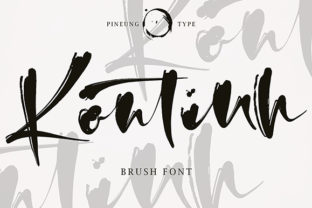
Kontinh: Handwritten Font with Authentic Swashes
Kontinh isn’t just another handwritten font—it’s a carefully crafted tool for designers and creators who value both personality and precision. With its fluid, natural stroke rhythm and thoughtfully designed swashes, Kontinh delivers authenticity without sacrificing legibility or versatility. It doesn’t imitate handwriting; it captures its confidence, variation, and warmth—making it ideal for projects where voice and visual identity matter.
What Makes Kontinh Stand Out
Most script fonts rely on repetition or digital polish to achieve consistency. Kontinh does the opposite: it embraces subtle irregularities—the slight taper of a downstroke, the organic lift at the end of a letter, the graceful curve of a connecting swash. These aren’t flaws; they’re intentional details that echo real pen-on-paper movement. The swashes aren’t decorative add-ons—they’re integrated, functional extensions that flow naturally from letters like g, y, l, and f, giving you expressive control without extra layers or manual adjustments.
Unlike many display scripts, Kontinh includes full Latin character support, standard punctuation, numerals, and OpenType features like contextual alternates and ligatures. That means you can set body copy in a supporting sans-serif and switch to Kontinh for headlines, pull quotes, or callouts—without breaking rhythm or hierarchy.
Creative Applications That Work—Not Just Look Nice
Kontinh shines where human connection matters most: brand storytelling, editorial design, product packaging, and digital content that needs warmth. Here’s how different users apply it meaningfully:
- Small business owners use Kontinh for café menus, boutique signage, and local event posters—pairing it with clean, neutral typefaces to keep messaging clear while adding approachable charm.
- Educators and course creators integrate Kontinh into slide headers, workbook titles, and certificate designs to signal care and intentionality—helping learners associate material with thoughtfulness, not just utility.
- Bloggers and newsletter writers deploy Kontinh sparingly: for section dividers, email subject lines (in image-based headers), or featured quote graphics. Used this way, it adds distinction without compromising readability on mobile screens.
- Freelance designers build flexible brand systems around Kontinh—using its swashes as standalone graphic elements (e.g., as dividers, borders, or watermark motifs) to unify visual language across print and digital touchpoints.
Practical Tips for Stronger Results
Great typography isn’t about picking the flashiest font—it’s about matching form to function. Kontinh rewards thoughtful application. Here’s how to get the most from it:
- Respect scale and spacing. Kontinh’s swashes gain impact at larger sizes (24pt+ for print, 32px+ online). At smaller sizes, stick to the base characters—avoid forcing swashes where they’ll blur or compete with surrounding text.
- Pair intentionally. Kontinh works best with understated sans-serifs (like Inter, Poppins, or Helvetica Now) or low-contrast serifs (such as Lora or PT Serif). Avoid pairing it with other scripts or overly decorative fonts—clarity comes from contrast, not competition.
- Limit usage to one or two strategic roles per project. Use it for your logo, headline, or signature element—and let supporting fonts handle body copy, captions, and UI labels. This preserves its impact and keeps layouts organized and audience-friendly.
- Test color contrast early. Because Kontinh’s strokes vary in weight, some combinations (e.g., light gray on white) may reduce legibility. Always preview in context—not just in your font menu—and check against WCAG guidelines if publishing publicly.
Variations and Stylistic Flexibility
Kontinh isn’t locked into one mood. Its expressiveness shifts depending on how you use it:
- Minimalist mode: Use only upright characters, no swashes, with generous line height and ample margins. Ideal for modern brand identities aiming for quiet confidence—not whimsy.
- Editorial warmth: Enable contextual alternates and use swashes selectively on first letters of section headers or pull quotes. Works especially well in lifestyle magazines, newsletters, or podcast show notes.
- Handmade craft aesthetic: Combine Kontinh with textured backgrounds, subtle paper grain overlays, or muted, earthy color palettes. Perfect for artisanal product labels, workshop handouts, or handmade greeting cards.
None of these require special software skills—just attention to purpose and audience. A wedding invitation designer might lean into elegant swashes and gold foil, while a sustainability nonprofit might use Kontinh’s base characters in deep green on recycled paper—same font, completely different resonance.
Why It Fits Real Creative Workflows
Kontinh was built for use—not just display. It exports cleanly to web fonts (WOFF2), supports variable font workflows (where available), and renders consistently across Figma, Adobe Creative Cloud, and modern browsers. Designers report faster iteration because Kontinh’s OpenType features automate common refinements—no need to manually swap glyphs or adjust kerning for every headline.
For educators building slide decks or freelancers drafting client presentations, that reliability saves time without sacrificing quality. And because Kontinh avoids overused tropes (no excessive bounce, no forced “playfulness”), it helps your work stand out by feeling grounded—not generic.
A Final Note on Intentional Creativity
Typography choices communicate before a single word is read. Kontinh gives you a voice that feels human, considered, and capable—not just decorative. Whether you’re launching a small batch of ceramics, designing a conference agenda, or writing a weekly reflection for your team, Kontinh supports clarity *and* character. It doesn’t ask you to force creativity—it invites you to align your tools with your intent.
Start small: replace one generic heading in your next project with Kontinh. Adjust tracking, test a swash on the first letter, and see how the tone shifts—not dramatically, but meaningfully. That’s where useful creativity begins: not in grand gestures, but in precise, human-centered choices.