Margreta: A Handwritten Font for Expressive Typography
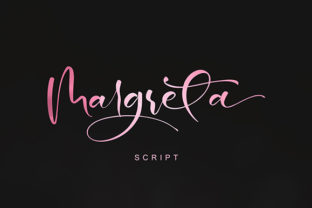
Margreta is a playful, bold handwritten font distinguished by its lively rhythm, confident letterforms, and prominent swashes. Designed with intention—not just ornamentation—its strokes carry weight and movement, making it stand out in contexts where personality and human touch matter. Unlike script fonts that prioritize elegance or formality, Margreta leans into expressive energy while retaining legibility at moderate sizes.
People exploring typography options often encounter Margreta when seeking alternatives to overused casual scripts or overly rigid display fonts. Its appeal lies not in universal applicability, but in specific communicative goals: conveying warmth without sacrificing impact, suggesting creativity without veering into informality, or adding visual distinction to short-form text like logos, headlines, or social media graphics.
Why Consider Margreta?
Designers and content creators may be drawn to Margreta for several practical reasons. First, its swashes are integrated thoughtfully—not as afterthoughts, but as functional extensions of the letterforms. These flourishes enhance flow in connected words and add subtle emphasis without overwhelming the composition. Second, Margreta’s contrast between thick downstrokes and thin upstrokes gives it visual presence, especially in larger sizes. Third, its irregular baseline and slight variations in letter height mimic natural handwriting, lending authenticity to branding or editorial projects aiming for approachability.
It’s worth noting that Margreta is not a variable font and does not include extensive language support beyond Latin-based scripts. Its character set covers standard Western European languages, with no built-in Cyrillic, Greek, or extended diacritics. Users requiring multilingual typesetting will need to pair it carefully with compatible fallback fonts.
Key Benefits and Realistic Tradeoffs
The primary benefit of Margreta is its strong visual identity. When used well, it helps differentiate a brand or message in crowded digital spaces—particularly where users scan quickly. Its boldness ensures visibility even on smaller screens, and its distinct rhythm supports memorability. For projects centered around storytelling, lifestyle content, or artisanal products, Margreta can reinforce tone more effectively than neutral sans-serifs or traditional serifs.
However, these strengths come with tradeoffs. Margreta’s expressiveness limits its utility in long-form text. Body copy set in Margreta becomes fatiguing to read due to inconsistent spacing, high stroke contrast, and reduced x-height. It is unsuitable for interfaces requiring accessibility compliance (e.g., WCAG AA/AAA), as its irregular shapes and tight counters reduce character recognition for some readers. Additionally, its swashes—while charming—can clash if overused or applied without typographic discipline. Pairing Margreta with highly decorative companions risks visual noise; it works best alongside clean, neutral fonts like Open Sans, Lato, or Source Serif Pro.
When Margreta Fits Well
Margreta shines in focused, intentional applications. It performs strongly in logo design for small businesses emphasizing craft, wellness, or creative services—think independent bakeries, yoga studios, or illustration studios. Its energy suits event invitations, poster headlines, or product packaging where hierarchy is clear and text is brief. Social media banners, podcast cover art, and email headers also benefit from Margreta’s ability to convey voice quickly and distinctly.
Designers working with limited color palettes or minimalist layouts may find Margreta especially useful: its inherent texture adds dimension without relying on extra graphic elements. Because it carries expressive weight on its own, it reduces the need for embellishment elsewhere in the design system.
When to Look Elsewhere
Margreta is less appropriate for contexts demanding neutrality, scalability across formats, or broad readability. Government websites, academic publications, financial dashboards, or enterprise software interfaces typically require fonts optimized for clarity, consistency, and performance across devices—all areas where Margreta’s design priorities diverge.
Similarly, projects requiring tight typographic control—such as responsive web typography with dynamic scaling or multilingual publishing—may expose limitations in Margreta’s OpenType feature set. Fonts like Playfair Display (for serif elegance), Quicksand (for friendly rounded simplicity), or DM Serif Display (for refined script versatility) offer comparable expressiveness with broader language coverage or more robust hinting.
Making an Informed Choice
Evaluating Margreta should begin with intent, not aesthetics. Ask: What role must this font play? Is it supporting a single headline—or shaping an entire typographic system? Does the project value immediacy and mood over adaptability and longevity?
Test Margreta in context before committing. Render sample text at actual usage sizes—on both desktop and mobile—and assess how it behaves next to supporting fonts. Check contrast ratios if accessibility is a requirement. Review licensing terms: Margreta is available through platforms like Google Fonts and Adobe Fonts, but commercial use rights vary depending on distribution method and scale.
Also consider workflow implications. If your team relies heavily on design systems or shared component libraries, ensure Margreta integrates smoothly with existing tools and constraints. Its lack of italic or condensed variants means designers must rely on spacing, weight shifts, or pairing strategies to create hierarchy—skills that require practice but reward thoughtful execution.
Final Thoughts
Margreta is not a default choice—and it shouldn’t be. Its value emerges most clearly when matched to specific communication needs: short-form impact, expressive authenticity, and stylistic cohesion in curated environments. It invites careful application rather than broad deployment.
For readers comparing fonts, Margreta represents one point along a spectrum of expressive typography—not the beginning or end of the search. Understanding its scope, constraints, and stylistic logic helps avoid mismatched implementation. Whether evaluating for a new brand identity, redesigning marketing assets, or selecting type for a personal project, grounding the decision in real-world usage—not just visual appeal—leads to more sustainable, effective outcomes.
If your goal is to signal creativity with confidence, and you have the flexibility to apply it deliberately, Margreta offers a distinctive, human-centered option. If your priority is flexibility, accessibility, or linguistic breadth, alternatives aligned with those goals will likely serve better.