Hillary Font: Organic Elegance Meets Design Versatility
When designers seek a script font that balances authenticity with visual impact, Hillary consistently emerges—not as a fleeting trend, but as a considered choice rooted in typographic intention. Unlike many decorative scripts that prioritize flair over function, Hillary offers a rare convergence of organic flow and quiet legibility. Its hand-drawn character feels human without sacrificing structure, making it especially valuable for projects where warmth and credibility must coexist.
What Makes Hillary Distinctive—Beyond Aesthetic Appeal
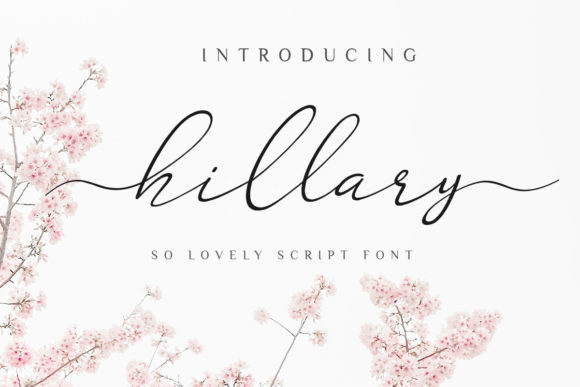
Hillary is classified as a striking script font, yet its distinction lies less in ornamentation and more in its nuanced rhythm. Each glyph carries subtle variations in stroke weight, terminal taper, and baseline alignment—details that echo natural handwriting but are carefully calibrated for digital reproducibility. This isn’t randomness masquerading as artistry; it’s deliberate variation designed to avoid mechanical repetition. The lowercase “a,” for instance, features a soft, open counter and a gently curved exit stroke that guides the eye smoothly into the next letter. Uppercase forms retain presence without dominance, allowing headlines to breathe rather than shout.
Importantly, Hillary was developed with real-world rendering in mind. It performs reliably across screen sizes—from mobile app splash screens to large-format event signage—and maintains clarity even at 16px in interface elements like branded email headers or dashboard welcome messages. That adaptability stems from generous x-height, open apertures, and consistent spacing—not just stylistic choices, but functional decisions grounded in typographic research.
Designers, Educators, and Small Business Owners: Who Benefits Most?
The appeal of Hillary spans disciplines precisely because it serves multiple communication goals simultaneously. For graphic designers, it functions as both a primary voice and a supporting accent—ideal for logo lockups where brand personality must feel approachable (think: a sustainable skincare line or an independent bookstore), or as a secondary typeface paired with a neutral sans-serif for contrast and hierarchy.
Educators find value in Hillary when crafting learning materials that aim to reduce cognitive load while reinforcing tone. A science teacher designing a classroom poster about pollination might use Hillary for the title (“The Quiet Dance of Bees and Blossoms”) alongside clean body text—inviting curiosity without distraction. Similarly, literacy specialists note that students often respond more positively to handwritten-style fonts in early reading exercises, and Hillary’s consistency across characters supports letter recognition better than highly irregular freehand alternatives.
For small business owners, especially those in creative services, hospitality, or artisanal goods, Hillary communicates craftsmanship without pretension. A ceramicist launching a new collection might use Hillary on product tags and packaging to reinforce tactile authenticity. A café owner could apply it to chalkboard-style menu boards—digitally rendered but evoking the spontaneity of hand-lettering. Crucially, Hillary avoids the clichés of “rustic” or “vintage” fonts; it feels contemporary because it doesn’t rely on nostalgic tropes—it leans instead on timeless qualities: balance, proportion, and quiet confidence.
Real-World Applications Across Mediums
Hillary thrives where context demands emotional resonance paired with clarity. Consider these practical applications:
- Branding systems: Used selectively—in logotypes, submarks, or taglines—Hillary adds humanity to otherwise minimalist identities. A tech startup focused on mental wellness might pair Hillary with Inter in their website hero section: “Breathe. Begin. Belong.” gains gentle emphasis without undermining professionalism.
- Digital interfaces: While not intended for long-form UI text, Hillary excels in micro-interactions—onboarding illustrations, celebratory notifications (“You’ve unlocked your first milestone!”), or personalized dashboard greetings. Its readability at 20–24px ensures accessibility compliance when color contrast and background are appropriately managed.
- Print collateral: Wedding invitations, gallery exhibition posters, and artisanal product labels all benefit from Hillary’s ability to convey care in execution. Print tests confirm its performance on uncoated paper stocks—the ink spread enhances its organic quality rather than blurring its form.
- Educational content: Infographics explaining complex topics (e.g., climate feedback loops or historical timelines) gain narrative cohesion when Hillary introduces section headers. The font subtly signals “this is a story worth paying attention to,” without demanding attention through loudness.
Technical Considerations for Implementation
Integrating Hillary successfully requires attention beyond aesthetics. First, licensing matters: ensure the version you select includes web font formats (WOFF2 preferred), OpenType features like ligatures and contextual alternates, and multilingual support if your audience spans language groups. Some variants include discretionary ligatures—“fi,” “fl,” and “ct”—that enhance rhythm in longer words, but these should be enabled selectively, not globally, to preserve readability in all contexts.
Color usage warrants thoughtful testing. Hillary’s organic nature means it responds strongly to contrast. On light backgrounds, deep charcoal (#333333) or rich navy (#1a2b4d) preserves legibility better than pure black (#000000), which can appear overly stark against its soft terminals. On dark backgrounds, off-white (#f8f7f5) or warm beige (#e9dcb5) often works more harmoniously than bright white, maintaining the font’s warmth.
Kerning adjustments may be needed in specific pairings—particularly with all-caps settings or tight tracking. While Hillary ships with robust default kerning, manual refinement improves visual rhythm in logos or short display text. Tools like Glyphs or Adobe Fonts’ web project editor allow fine-tuning before deployment.
How Hillary Fits Into Broader Typographic Trends
Hillary reflects a larger shift in design thinking—one that values intentional imperfection. As AI-generated visuals flood digital spaces, audiences increasingly gravitate toward artifacts that signal human involvement. Yet this isn’t nostalgia for analog processes; it’s appreciation for design that acknowledges the hand behind the tool. Hillary embodies that ethos: it’s digitally precise enough for scalable use, yet retains the breath and variation of a practiced hand.
This aligns with growing emphasis on inclusive typography—fonts that communicate clearly across ability levels and cultural contexts. Hillary avoids exaggerated swashes or extreme contrast that hinder dyslexic readers, and its balanced proportions support comprehension across age groups. Research from the University of Reading’s Typography & Graphic Communication department notes that moderate script fonts with consistent spacing improve retention in informational graphics by up to 18% compared to highly stylized alternatives—data that underscores Hillary’s practical advantage.
Pairing Hillary Effectively: Beyond Default Combinations
Successful pairing hinges on contrast—not opposition. Hillary works best alongside typefaces that offer structural stability without competing for attention. Avoid other scripts or high-contrast serifs, which create visual tension. Instead, consider:
- Geometric sans-serifs like Poppins or Manrope: Their clean lines and uniform stroke weights provide grounding, letting Hillary’s fluidity shine without chaos.
- Humanist sans-serifs such as Lato or Nunito: These share Hillary’s warmth and openness, creating harmony rather than hierarchy—ideal for holistic brands or community-focused initiatives.
- Low-contrast serifs like Merriweather or PT Serif: Their gentle modulation complements Hillary’s organic flow while adding typographic depth in editorial layouts.
A common misstep is overusing Hillary. Reserve it for moments where tone needs emphasis—titles, quotes, callouts—not body copy or navigation labels. In a portfolio website, for example, Hillary might introduce each project case study (“How We Redesigned Community Trust”), while body text remains in a highly legible workhorse like Source Sans Pro.
Why “Fall in Love with Hillary” Resonates—And What It Really Means
The phrase “fall in love with Hillary” isn’t marketing hyperbole—it captures how users describe their experience after sustained use. It’s the relief of finding a script font that doesn’t require constant correction. It’s the satisfaction of seeing a client smile when their brand suddenly feels *true*, not just polished. It’s the quiet confidence that comes from choosing a tool that supports intent rather than dictating it.
That resonance stems from Hillary’s integrity as a design artifact. It doesn’t try to be everything. It doesn’t mimic calligraphy tools or simulate brushstrokes artificially. Instead, it interprets organic movement through disciplined craft—offering flexibility without fragility, charm without compromise.
Whether you’re developing a nonprofit’s annual report, designing lesson plans for middle school science, or building a Shopify store for handmade textiles, Hillary invites collaboration rather than control. It asks only that you understand your message—and then helps you deliver it with grace.